



Understanding the Importance of a Basement Dehumidifier
Why a Dehumidifier is Essential for Basements
Many homes have basements that can easily fall victim to moisture and dampness, creating a breeding ground for mold and mildew. This is not just an eyesore; it can pose serious health risks to you and your family. A basement dehumidifier helps control humidity levels, keeping your basement dry and safe. Imagine entering your basement and finding a clean, dry space rather than dealing with musty smells and damp surroundings—this is possible with the right machine.
Health Benefits of Maintaining Optimal Humidity Levels
Excess humidity can lead to respiratory issues, allergies, and other health problems. With a dehumidifier, you’re not just protecting your home structure; you’re also safeguarding your family’s health. Picture enjoying your basement as a cozy family room or a workout area without worrying about potential health hazards caused by mold. That can become a reality when you invest in a quality basement dehumidifier.
Key Features to Look for in a Basement Dehumidifier
Size and Capacity
One of the first things to consider when selecting a dehumidifier is the size and capacity. It’s essential to choose a model that can handle the amount of humidity specific to your basement’s square footage. You want a unit that is neither too small, which wouldn’t effectively reduce humidity, nor too large, which could waste energy. It’s like choosing a car— you need the right size to suit your needs without overkill.
Humidity Control Settings
Look for a dehumidifier that offers adjustable humidity settings. This allows you to set your ideal humidity level based on your personal comfort and the environmental conditions. Many models come with humidity sensors that will automatically adjust performance. Think of it as having a temperature-regulated environment; it adapts to your needs to maintain comfort.
Energy Efficiency
Energy efficiency is also crucial, especially since a dehumidifier runs for long periods. Check for energy-efficient models which can save you money on your utility bill. A good comparison here is how energy-efficient appliances work compared to standard ones; they use less energy while providing the same level of performance.
Continuous Drain Option
Many of us forget to empty a water reservoir, which can lead to more moisture in your basement. Choosing a dehumidifier with a continuous drain option simplifies your life. This feature allows moisture collected to automatically drain out through a hose, so you never have to think about it. Imagine never worrying about pouring out a bucket of water again—just a hassle-free, dry basement.
How to Choose the Right Size for Your Space
Calculating Your Basement’s Square Footage
To find the right dehumidifier size, first, measure your basement’s square footage. Smaller basements (up to 1,500 square feet) will require less capacity than larger spaces. Once you have the measurements, you can match them to the recommended capacity outlined by manufacturers, which shines a light on your best options.
Understanding Pint Capacity
Pint capacity refers to how much moisture a dehumidifier can extract from the air in a day. For instance, if your basement is around 1,500 square feet and experiences humid conditions, a dehumidifier with a capacity of 30 to 50 pints should be sufficient. Individually evaluating your basement’s moisture problems can ensure you choose a unit that will not only work effectively but also efficiently.
Top Recommendations for Basement Dehumidifiers
Best Overall Dehumidifiers
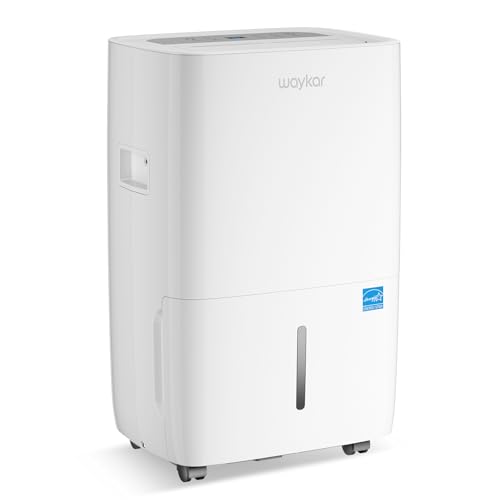
Based on our research, many users favor models that provide a balance of efficiency, capacity, and user-friendly features. Units that operate quietly while maintaining energy efficiency are particularly appreciated. Look for brands that have received positive feedback regarding durability and effectiveness in removing moisture consistently.
Budget-Friendly Options
For those looking to save, various budget-friendly models still offer impressive performance without skimping on crucial features. These units typically have a smaller capacity, making them ideal for less humid environments or small basements, ensuring you don’t break the bank.
Premium Models for Larger Spaces
If you have a larger basement or face persistent moisture issues, investment in a premium model could be essential. These models often come with advanced features such as Wi-Fi connectivity, which allows you to monitor and control humidity levels from your smartphone. This convenience ensures that even from a distance, you can keep your basement dry.
Tips for Maintenance and Maximizing Efficiency
Regular Cleaning and Filters
To maintain efficiency, clean the unit’s filters regularly according to the manufacturer’s instructions. A clean filter ensures the machine operates optimally, similar to how a clean air conditioner performs better. This small maintenance step can lead to significant improvements in air quality and efficiency.
Optimal Placement of the Dehumidifier
Locating your dehumidifier in the right spot enhances its performance. Place it where airflow is unrestricted and away from walls or furniture. If we liken it to positioning a fan, proper placement will lead to more effective circulation and moisture removal, ensuring every corner of your basement is reached.
Monitor Humidity Levels
Keeping an eye on the humidity levels will also help you understand how your dehumidifier is performing. Consider investing in a hygrometer if your unit doesn’t have one built-in. This additional step is similar to using a thermostat to gauge temperature; it provides peace of mind, knowing your dehumidifier is doing its job effectively.